Choosing the Right Sitar for Students: A Practical Buying Guide
- Home
- Choosing the Right Sitar for Students: A Practical Buying Guide

The sitar is an Indian classical instrument, and learning it is a beautiful process. To novices, though, the decision about the sitar instrument to use might be confusing. It is possible to have various sizes and materials, as well as prices, so that the right choice at the initial stage may help to make the learning process easier and more entertaining. This guide simplifies the fundamentals to assist students in choosing the sitar that would fit their requirements and their level.
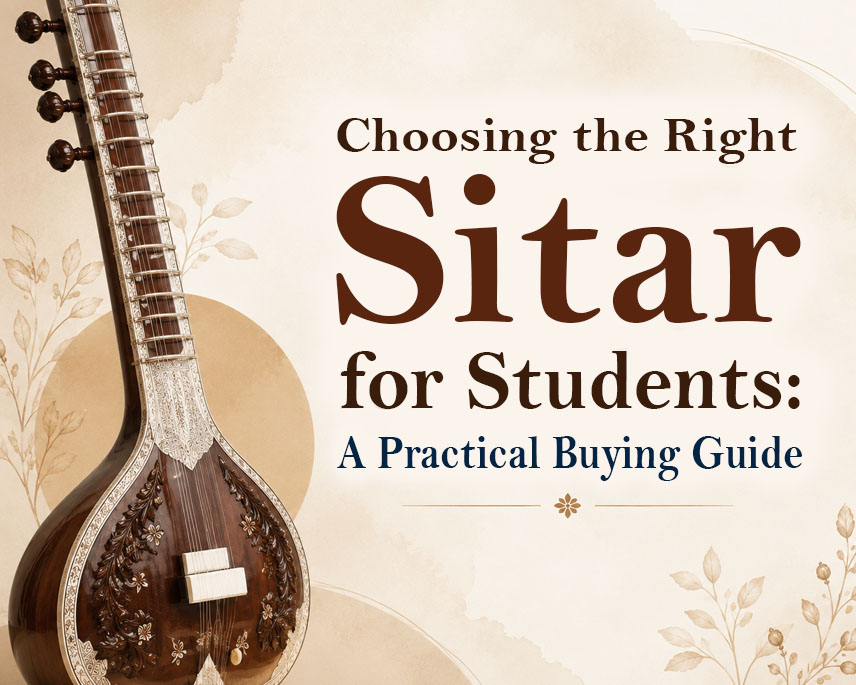
Sitar is a stringed instrument that has a long neck, gourd body with both playing and sympathetic strings. The classic sitar is normally fitted with 18-21 strings, though at the beginning, beginners are not to worry about all the technicalities. Comfort, good sound and durability are what count. A balanced sitar allows the students to concentrate on posture, fingers and rhythm, but not on the instrument itself.
To the students, particularly younger learners, size is important. Sitars are full-size, with some being heavier than others, with regard to the gourd and wood used. The heavy sitar may lead to tension when a person is practicing over a long time. In case the students are supposed to attempt holding the instrument to test balance and comfort. This can be of great assistance to a person who intends to take sitar classes in Delhi or any other place where practice becomes vital.
The neck of a sitar is usually made of aged teak or tun, and the gourd ought to be naturally dried and must not have any cracks. Novices are not supposed to use ornamental sitars that are made to be ornamental. A well-made sitar is able to bring a clear and consistent sound and last longer in tune. Buzzing of sound also reduces with clean craftsmanship and distracts the students who are learning sitar music.
The tuning of sitar is a problem for new learners, hence, a sitar should be selected with good tuning pegs. Low-quality pegs cannot hold very well, and practice is frustrating. Although a replacement of the strings will be necessary in the long run, a beginner sitar is likely to be suitable in terms of tuning as one practices the instrument on a daily basis, both at home and in online sitar lessons.
An average entry level sitar will be within the middle price range. Very low-priced instruments were likely to sacrifice the quality of sound and construction, and it is not that beginners needed to have professional sitars. Reliability is more useful than perfection for students who are concerned with Indian classical music.
The selection of the correct sitar is not a matter of impressing other people but facilitating education. A relaxed, good-quality instrument extends the feelings of confidence and makes the students like the process of classes with music instruments. The advice of a veteran teacher may also help beginners not make the common errors of buying the first sitar.
To students who want to learn in a more organized way and obtain intelligent guidance, Ratna Lahiri offers the training of sitar skills based on the traditional approach, where the learner works on mastering the technical and musical knowledge at his/her own speed.