The Importance of Guru–Shishya Parampara in Modern Sitar Learning
- Home
- The Importance of Guru–Shishya Parampara in Modern Sitar Learning

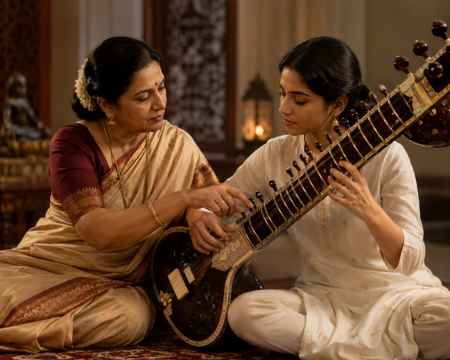
One of the oldest Indian classical arts is the Guru- Shishya Parampara tradition of learning. It is an organization in which knowledge is transferred via intimate, close mentoring, and not necessarily formal training. Here, in the case of sitar music, this tradition does not only deal with playing notes, but with internalizing the richness, training, and virtues of the music. Over the centuries, it was used to bring up generations of musicians and preserve the Indian classical music soul.
The sitar is melodious and complicated. It needs accuracy, patience and a great deal of emotional attachment to sound. In the Guru-Shishya Parampara, a student is taught some delicate methods, like meend (glides), gamak (oscillations) and raga progression, in the lived experience of the guru. Such intricacies can hardly be understood only by means of books or videos. A guru fixes posture, tone and timing on the spot making the learning remain authentic and disciplined.
Acquiring Indian classical music is not just a skill but a mindset too. Under the conventional system, the students watch the guru practice, listen and even meditate in silence. This creates humility, concentration and respect for the music. In the past years, students used to stay with their teachers or spend much time with them and cultural values and musical sensitivity were transmitted naturally. This is what endows classical music with richness and continuity when it is transmitted emotionally.
Nowadays, the way of life has evolved, and the modes of learning have increased. Most of the students are now resorting to online classes of the sitar or organized classes in musical instruments. Although these formats are quite convenient, the basic tenets of the Guru-Shishya Parampara can be retained. It is possible that even in the contemporary situation one-on-one mentoring, detailed feedback, and long-term relationships between teachers and students can still be made. Technology is not something that is going to replace direction.
Students in towns where classical music is becoming popular tend to find a knowledgeable sitar instructor in Delhi or a learning environment. Even in organized learning institutions, the traditional relationship between the teacher and the student remains the basis of significant learning. It makes sure that the up-to-date learners remain in touch with the origins of the art without losing modernization to the demands of modern life.
Guru-Shishya Parampara teaches us that music is not a quick learning process; it is a process that we should follow throughout our lives with the help of trust, patience, and profound listening. This tradition brings sanity during a fast changing world because the learning of the sitar remains grounded, personal and culturally vivid. This method remains important to the artists and teachers such as Ratna Lahiri, who prove that despite the times, the essence of sitar teaching is the eternal relationship between an earnest student and a loving teacher.