Why Learning Sitar Builds Discipline and Musical Depth in Students
- Home
- Why Learning Sitar Builds Discipline and Musical Depth in Students

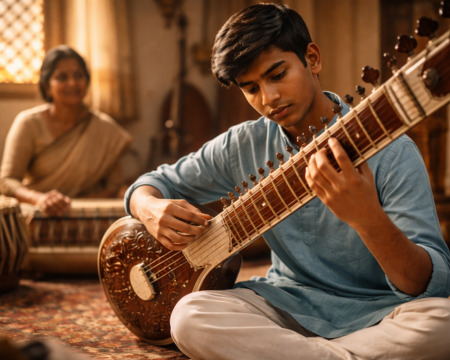
It is not only about sound and learning how to play the musical instrument in a classical manner, but it is also about moulding the mind, habits and emotional consciousness of a student. The sitar instrument is a special instrument among the Indian classical instruments based on its depth, structure and expressive value. Students opting to learn about the sitar music have the benefit of realizing that the study develops a sense of discipline in the students, as their comprehension of music as art increases.
The sitar demands patience. With the sitar, it is a gradual process as opposed to other instruments that deliver immediate outcomes. Tuning, positioning of the fingers, and rhythmic patterns should be practiced by the students on a daily basis. This discipline habit develops self-discipline, time management, and regularity skills, which are not only limited to the field of music but also applied in real life.
The Indian classical training is in a systematic form of ragas and talas. Students who are being taught Indian classical music by means of the sitar are exposed to a disciplined practice of listening, repetition, and refinement. This practice will eventually be a habit, and learners will learn the importance of hard work and concentration.
Sitar music is closely related to emotion and mood. The raga is a reflection of a certain mood, the time of the day or the mood. During learning, students are not only advised to play notes, but also learn the emotional meaning of the notes. This assists in the formation of musical sensitivity and richness.
As opposed to the fast-paced modern music learning, the sitar learning focuses on the listening process, not only to the teacher but to oneself. This makes students more aware of music and makes them realize that there are subtle changes in tonal and rhythms. This profound straining of the ears, regardless of the physical classes or online sitar classes taken by students, is central in the process of learning.
The performance of the sitar compels a great synchronization of the two hands, a good listener, and concentration of the mind. This enhances focus and minimizes distraction of the mind. Research studies of music education indicate that learners of classical instruments tend to improve their memory and emotional control.
Enrolling in organized music instrument lessons especially among young learners allows the development of confidence and patience. Errors are seen as lessons in development, which are lessons in endurance and self-discipline.
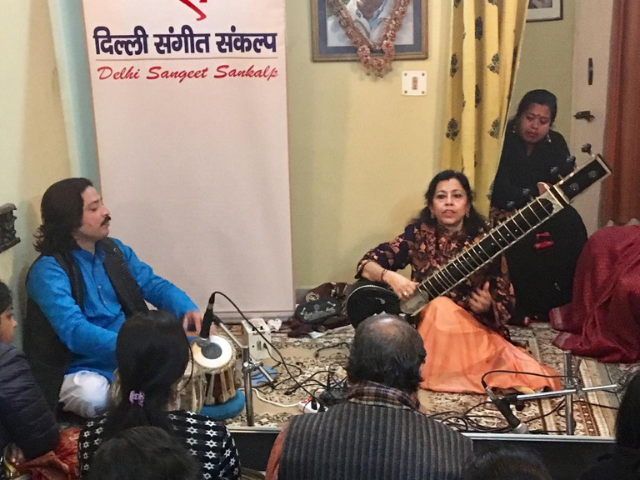
Classical music is still gaining popularity in such cities as Delhi. Sitar-learning students in Delhi usually get a chance to be exposed to a deep musical heritage that fosters appreciation to heritage but promotes creativity. The steep learning curve that the sitar imposes, makes sure that students are dedicated, critical and within context in their musical experience.
Ratna Lahiri is reputed to be well knowledgeable on the subject of Indian classical traditions, as well as, having a keen sense of sitar education. She has taught for years to steer students towards not only technical prowess, but discipline, emotion, as well as respect for the art of sitar music.